Training
Hold & release drills: improve timing and control
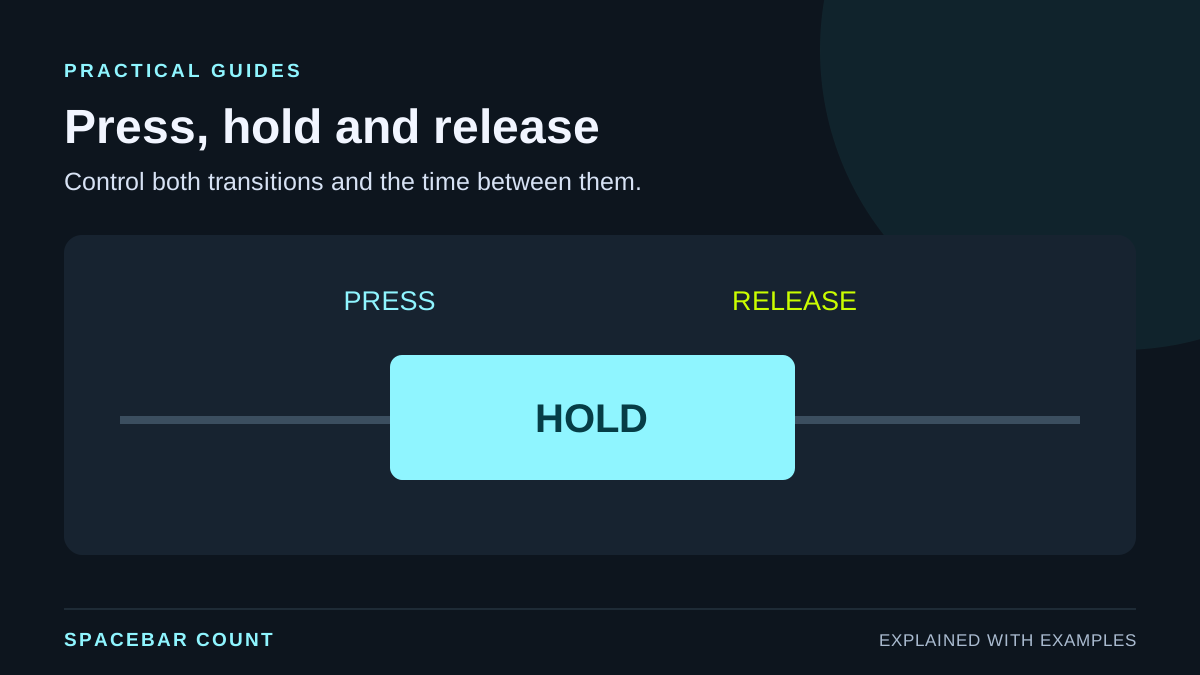
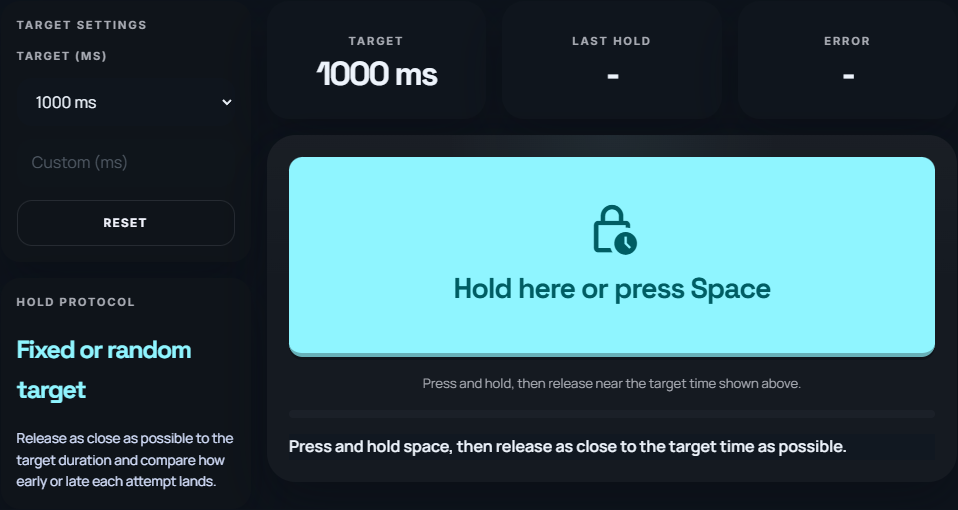
Compare a held key with a target duration. Record early and late releases while keeping the target fixed.
Before you start
Hold and release drills are about control, not raw speed. This mode trains clean timing so your rhythm and reaction tests feel smoother and more consistent.
1. Why hold and release matters
The test measures the gap between your press and release, then compares it with a target hold. It helps you see whether a particular release was early or late. Treat this as its own measurement; a better hold score does not establish that your visual reaction time has improved.
2. Start with short targets
Choose one target, such as 1,000 ms, and record several attempts before changing it. Longer targets are different conditions, not automatic difficulty levels.
- Keep the target fixed for a comparison set.
- Record the measured hold as well as the early or late error.
- Try a second target in a separate set.
3. Keep the same cadence
Count out loud or use a timer cue so each hold and release matches the same rhythm. Inconsistent cadence makes progress hard to track.
4. Track timing drift
Log when your release timing slips. That is usually where your control needs work.
- If you release early, keep the target fixed and try to release later on the next attempt.
- If you release late, keep the target fixed and try to release earlier.
- If your hand tenses, take a short break.
Tip: Clean timing beats high speed. Log hold error separately from rhythm and consistency results.
A 900 ms hold and a 1,100 ms hold against a 1,000 ms target have errors of −100 ms and +100 ms. Their signed average is zero, but neither release was on target. The mean absolute error is 100 ms.
See why early and late errors do not cancel
Enter a target and several recorded holds. Compare signed errors with the average absolute error.
Subtract the target from each hold. Negative is early; positive is late. Absolute error keeps an early release and a late release from cancelling each other out.
The example includes every value shown above.
5. Combine with other modes
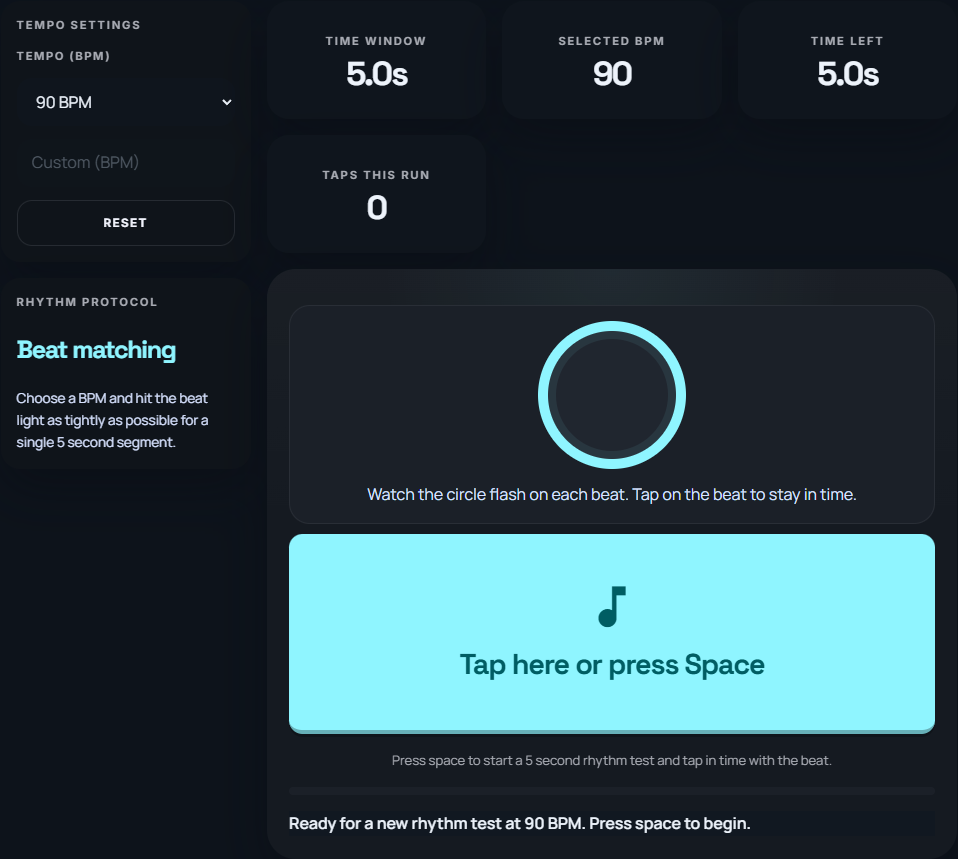
Pair hold and release with rhythm mode for timing, then add endurance once per week to see how control holds under fatigue.
Drill idea
- Hold for 1 second
- Rest for 1 second
- Repeat for 60 seconds
- Increase the hold time
- Track drift each round