Training
Consistency mode training plan: stabilize your CPS
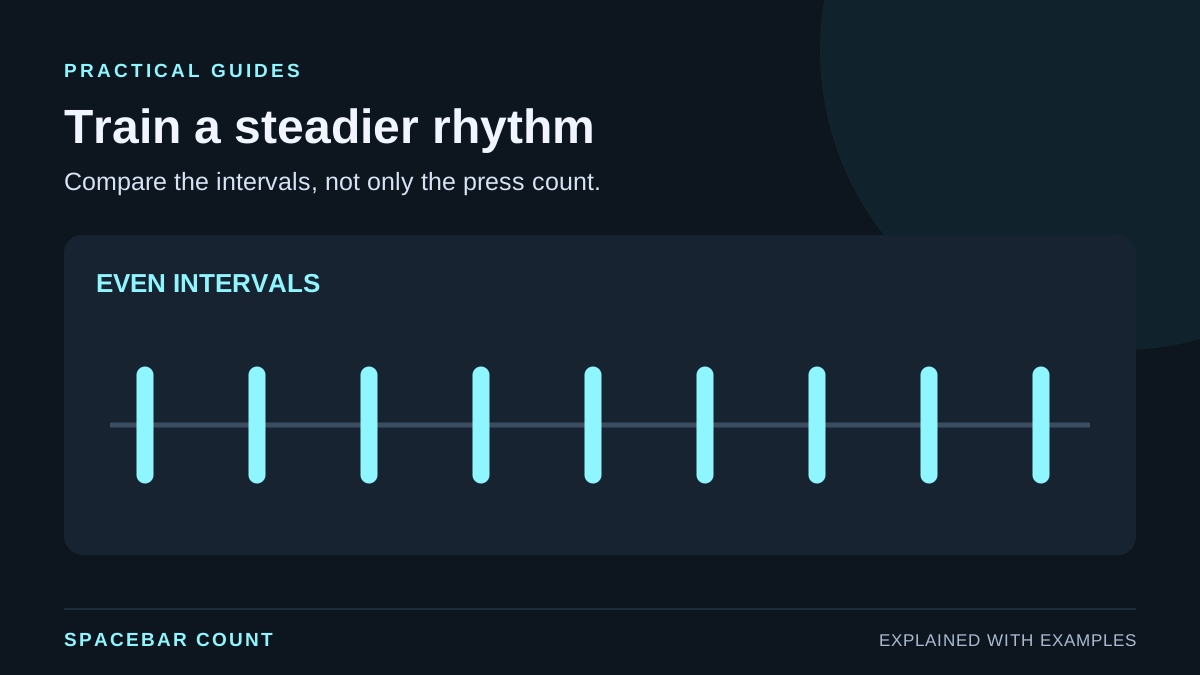
Keep the tap target and intended pace fixed, then compare the intervals between presses across complete runs.
Before you start
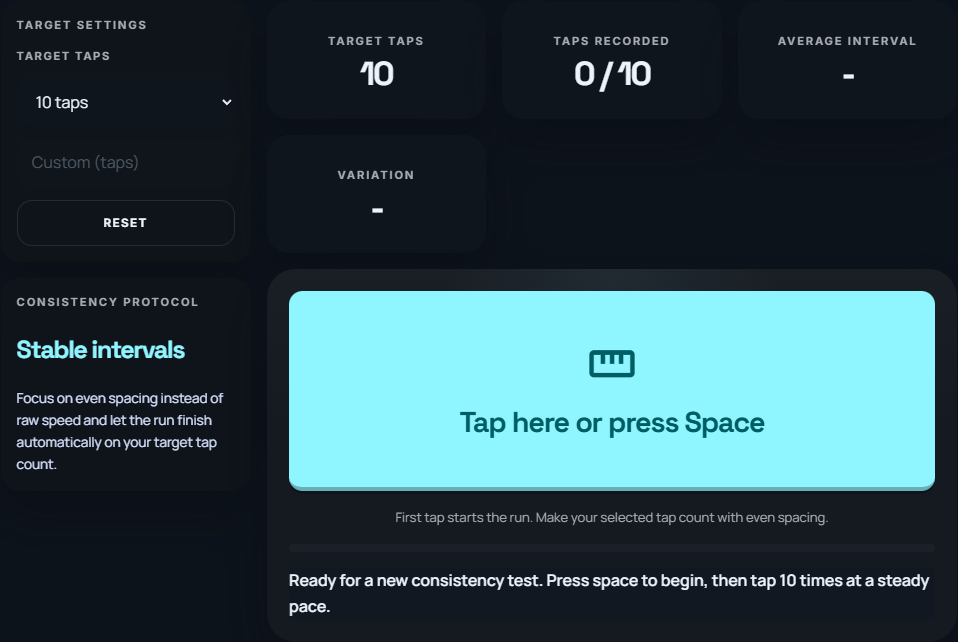
Consistency mode measures how steady your taps are. If your timing variance shrinks, your CPS becomes more reliable and less dependent on short bursts.
1. Start with a baseline week
Choose a tap target, complete five runs at that same target, and log the average interval plus variation. The test ends after the selected number of taps, rather than a chosen duration.
- Keep the tap target and your intended pace fixed when comparing sessions.
- Track the average interval, not just your CPS.
- Note fatigue or tension after each session.
Same average pace, different timing
Edit the gaps between presses in milliseconds. Two patterns can have the same average while their spacing differs.
A smaller interval range means the gaps are closer together. The range here is longest gap minus shortest gap; it is not the consistency tool’s variation score.
The example includes every value shown above.
2. Use the 3-2-1 session structure
Short, repeatable sets give you better control than long sessions.
| Block | Runs | Goal |
|---|---|---|
| 3 | 3 short runs | Warm up rhythm |
| 2 | 2 measured runs | Lock timing |
| 1 | 1 clean run | Record result |
3. Add rhythm mode on off days
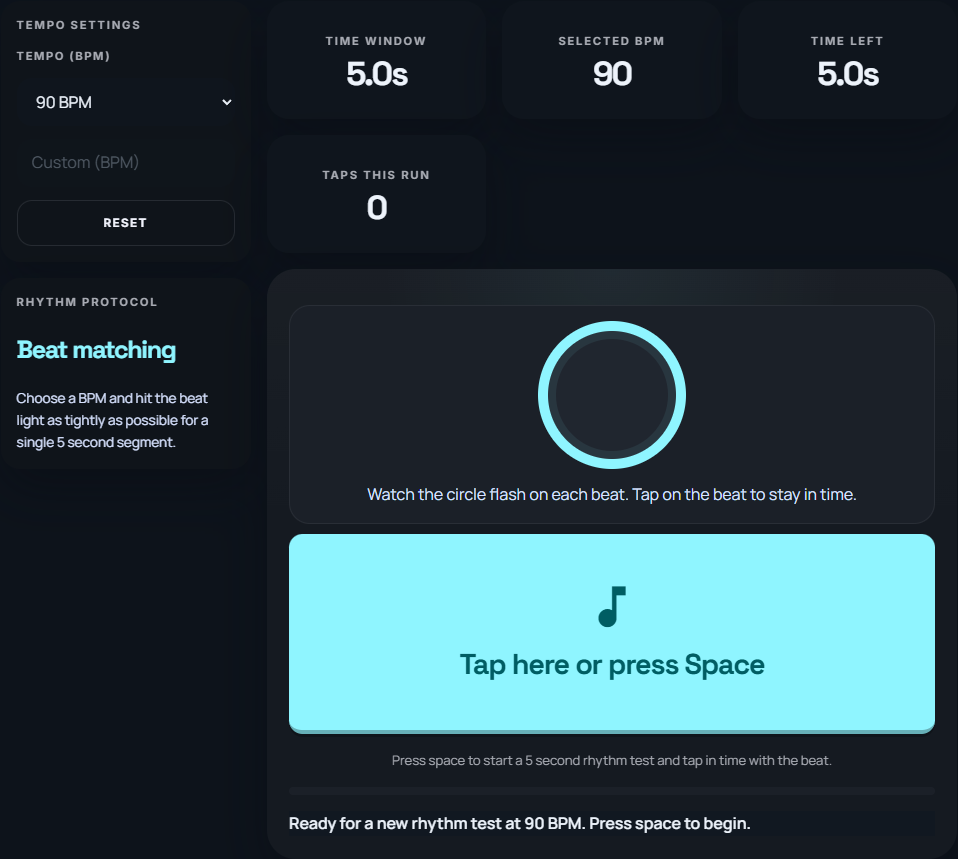
Rhythm mode helps you feel a steady beat. That timing awareness transfers to consistency runs.
4. Track the right signals
Small improvements in variation matter more than raw CPS jumps.
- Lower variation equals steadier output.
- Compare the last five runs, not a single best.
- Adjust rest time if variation spikes late.
Five taps produce four intervals: each gap needs a press at both ends. A perfectly even set of 100 ms gaps and an alternating 60/140 ms pattern both average 100 ms. Their spacing is different, which is why an average by itself cannot describe consistency.
5. Build a weekly split
Use a simple split that alternates consistency, burst, and rest days.
- Day 1: Consistency (3-2-1 plan)
- Day 2: Burst (short runs, longer rest)
- Day 3: Rhythm (short timing focus)
- Day 4: Rest or light speed test
- Day 5: Consistency (repeat baseline)
6. Avoid common mistakes
Consistency improves when you keep inputs stable and avoid overtraining.
- Do not chase peak CPS during consistency runs.
- Keep finger placement identical each session.
- Stop if your variation increases for three runs.
Weekly checklist
- Same tap target and intended pace
- 3-2-1 session plan
- Track variation
- Rhythm on off days
- Rest before spikes